Cybercriminals are becoming increasingly sophisticated so digital consumers, registry operators, registrars and other third parties need to stay ahead of emerging threats. Preventing brand impersonation is not just about protecting trademarks or corporate identities; it is fundamentally about safeguarding public trust in the digital economy. Fraudulent domain names can expose consumers to financial loss, identity theft and deception while undermining the reputation of businesses that have developed their brands over time. At the registry, proactive detection, responsible abuse mitigation and collaboration with registrars contribute to a safer and more trusted namespace. By protecting the integrity of domain names, we help create an environment in which businesses can establish their digital identities and consumers can engage online with greater confidence.
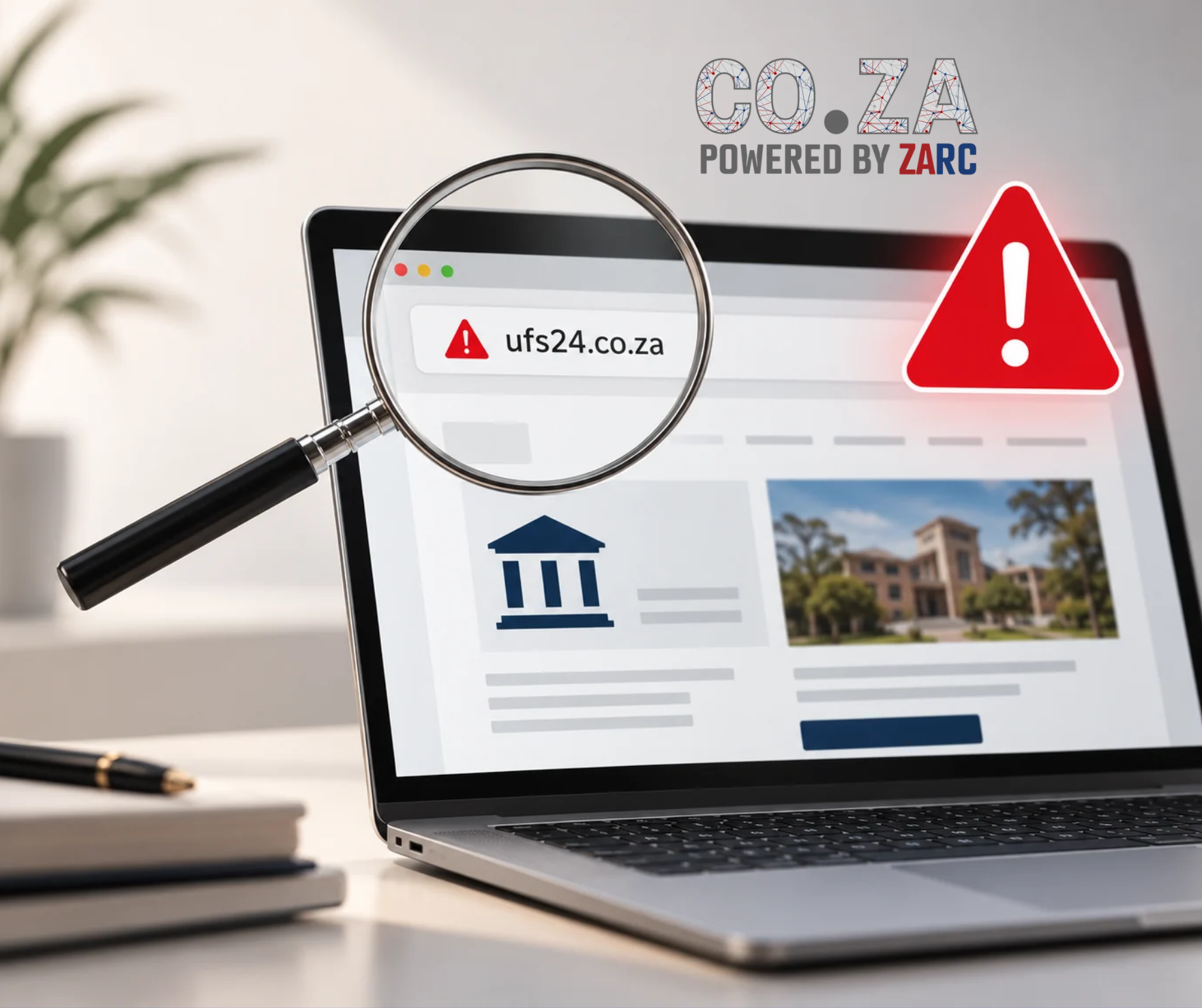
Recently, our abuse monitoring team investigated an impersonation scheme involving ufs24[.]co[.]za, a domain reported to mimic the official University of the Free State (UFS) student admission portal. The report raised concerns about deceptive website content and the potential risks to users. Following investigations and reporting to the listed accredited registrar, the domain name was placed on clienthold status, meaning that it stopped resolving and therefore could not be used to perpetuate abusive conduct. Please note that not every case reported or identified by the Registry will automatically prove unlawful conduct.
How does the Abuse Team Handle Brand Impersonation Cases?
For consistency and cohesion, the legal and customer support teams approach each case on its own merits, in terms of our published Complaints and Take Down Policy, which may be accessed using the link below:
https://zarc.web.za/wp-content/uploads/2026/01/Revised-Complaints-Abuse-and-Takedown-Policy_Version-002.pdf
We generally follow the steps below to address brand impersonation and other domain name abuse cases: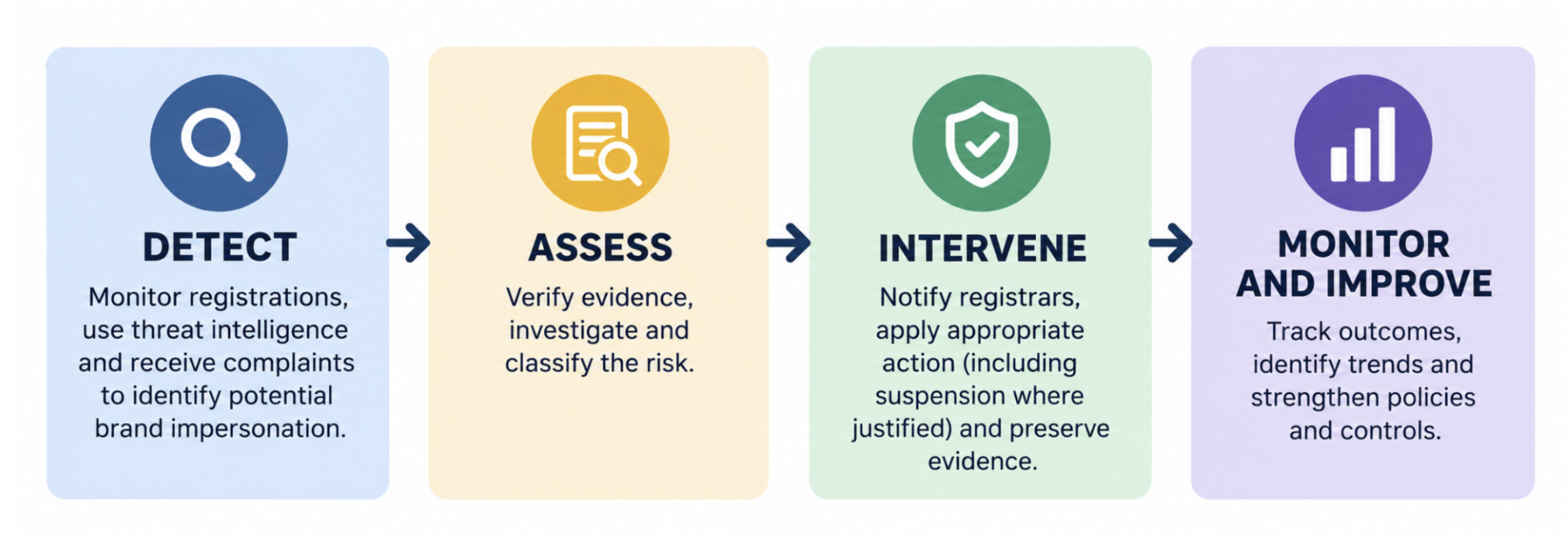
We will also determine whether there is sufficient evidence to support allegations of brand impersonation via the domain name itself, by investigating whether one or more of the following is present:
- Deceptive identity: The website falsely claims to represent the legitimate organisation.
- Brand misuse: Logos, trademarks or official branding are used to mislead visitors.
- Phishing: The website attempts to obtain passwords, banking information or personal information.
- Fraudulent transactions: Users are instructed to make payments to unauthorised accounts.
- Misleading communications: Emails impersonate official representatives or departments.
- Malicious technical activity: Malware distribution, credential harvesting or other security threats.
Throughout the abuse management process due diligence requirements are observed, meaning that registrants, registrars and other affected parties are notified and engaged to ensure that our findings are conclusive and well-founded
Preventing Brand Impersonation Measures
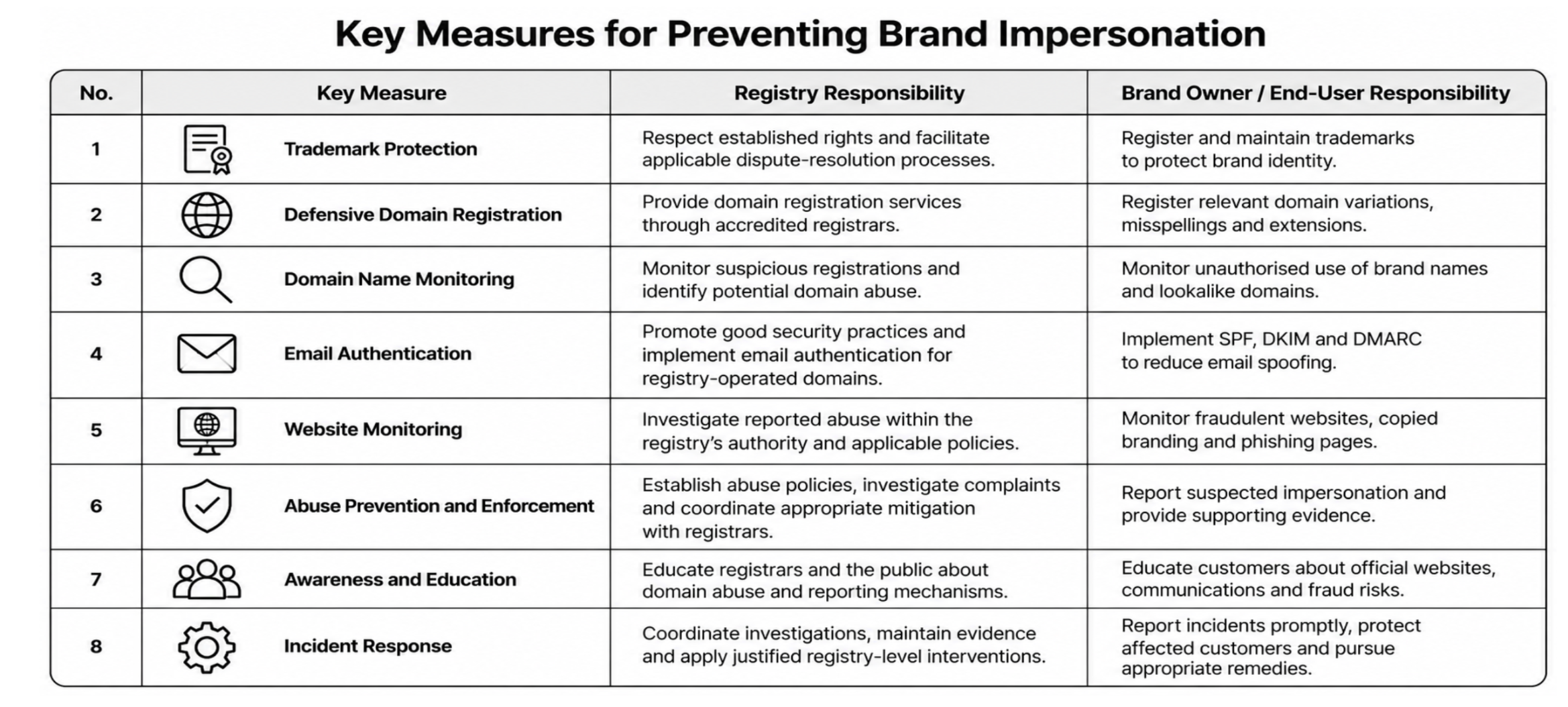
The table below sets out some key measures that both the Registry and end-users may consider employing to mitigate the risk of brand impersonation through unlawful use of its domain name.
If you encounter a website that appears to impersonate a university, public institution or established brand, report it to the Registry’s abuse desk at abuse@registry.net.za.
Protecting the .ZA namespace requires ongoing vigilance and cooperation between the Registry, registrars, institutions and Internet users. By reporting suspected abuse and following established procedures, we can help reduce online risks and contribute to a safer digital environment.
ZARC Legal and Policy