Reflections from the Africa Cybersecurity Indaba 2026
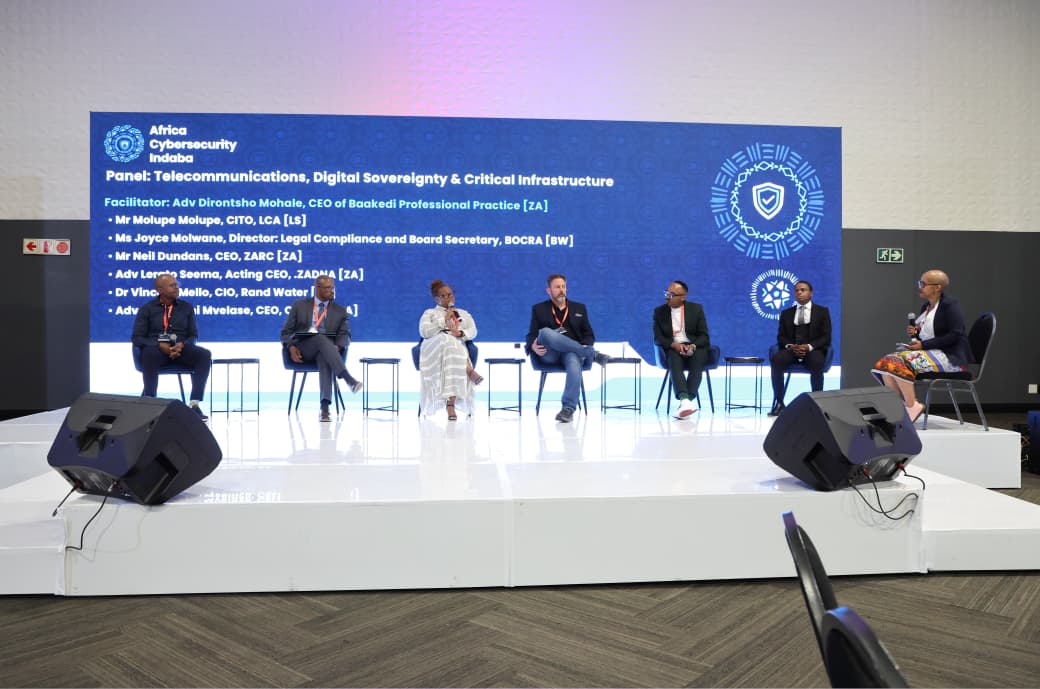
At the recent Africa Cybersecurity Indaba, held in Sandton, Johannesburg, on 28–29 October 2026, I had the opportunity to participate in a panel discussion on Telecommunications, Digital Sovereignty and Critical Infrastructure, exploring how Africa can build a more resilient, sovereign and trusted digital future.
Representing the ZA Registry Consortium (ZARC), I shared some perspectives on the Domain Name System (DNS), the importance of our national .ZA namespace, and the need to invest in the infrastructure and capabilities that underpin South Africa’s digital economy.
Recognising DNS as Critical Infrastructure
The DNS is often an overlooked component of critical digital infrastructure. Virtually every online service, from banking and government platforms to e-commerce and communications, depends on the ability to reliably resolve domain names.
With approximately 1.5 million registered domain names across the commercial .ZA namespaces, the registry infrastructure supporting these services plays an integral role in the functioning of South Africa’s digital economy.
Protecting this infrastructure is therefore not simply a technical responsibility; it is also a matter of national economic resilience, cybersecurity and digital trust.
Digital Sovereignty is about Capability, not Location
One of my central messages during the discussion was that digital sovereignty should not be confused with digital isolation.
It is neither practical nor necessarily desirable to insist that every component of our Internet infrastructure must be physically located within national borders. The Internet is inherently global and interconnected, and geographic distribution is itself an important contributor to resilience.
True digital sovereignty is about retaining meaningful control over our critical digital resources, developing the technical skills to operate and secure them, and maintaining the independence to respond when things go wrong.
South Africa has developed significant domestic registry operating capabilities, supported by an ecosystem that includes ZADNA as the statutory authority, ZARC as the registry operator, and local technical expertise and infrastructure.
Our domestic capability is important. It means that we are not entirely dependent on external providers to understand, manage or recover our national namespace.
Sovereignty is not simply about where infrastructure resides. It is about having the capacity to operate, protect and recover it.
Resilience must be Engineered and Continually Improved
Sovereignty, however, means little if the infrastructure we control cannot withstand disruption.
DNS infrastructure faces a range of threats, from unauthorised domain changes and cyberattacks to distributed denial-of-service attacks, network failures and international connectivity disruptions.
At ZARC, we place considerable emphasis on strengthening the resilience of the registry and DNS infrastructure through geographic and network diversity, distributed authoritative DNS services, anycast capabilities, continuous monitoring, security controls, and incident-response preparedness.
These measures are complemented by registry-level protections, including Registry Lock and DNSSEC, which help protect the integrity and authenticity of domain name services.
Resilience is not a once-off achievement. It requires ongoing investment, operational discipline, testing and continuous improvement as technologies and threats evolve.
No infrastructure operator can guarantee immunity from every cyberattack or technical failure. The real measure of resilience is the ability to withstand disruption, contain its impact and restore normal operations.
Building Africa’s Capacity to Remain Connected
The discussion also considered where Africa should prioritise investment in its digital infrastructure.
Our view is that we need to strengthen regional Internet Exchange Points, terrestrial network interconnection and locally distributed DNS anycast infrastructure, alongside continued investment in technical skills and operational capabilities.
A failure of an international subsea cable should not unnecessarily prevent African networks from communicating with one another or users from accessing essential African digital services.
We should be building an Internet ecosystem capable of sustaining regional connectivity and critical services even when international infrastructure is disrupted.
Emerging technologies, including artificial intelligence and machine learning, also offer opportunities to improve threat detection, operational intelligence and incident response. However, these technologies must complement sound engineering, established security practices and human expertise rather than replace them.
Sovereignty and Resilience Build Trust
Ultimately, a trusted digital economy depends on infrastructure that is secure, reliable and capable of recovering from disruption.
For South Africa and the broader African continent, achieving meaningful digital sovereignty requires more than policy declarations or infrastructure localisation. It requires sustained investment in people, technology, governance and operational independence.
As I emphasised during the panel discussion:
“True digital sovereignty is not something we can simply declare. It is something we must build.”
Resilience ensures the infrastructure we build continues to serve the people, businesses, and institutions that depend on it.
Neil Dundas
ZA Registry Consortium (ZARC)
Africa Cybersecurity Indaba 2026 | Sandton, Johannesburg | 29 October 2026